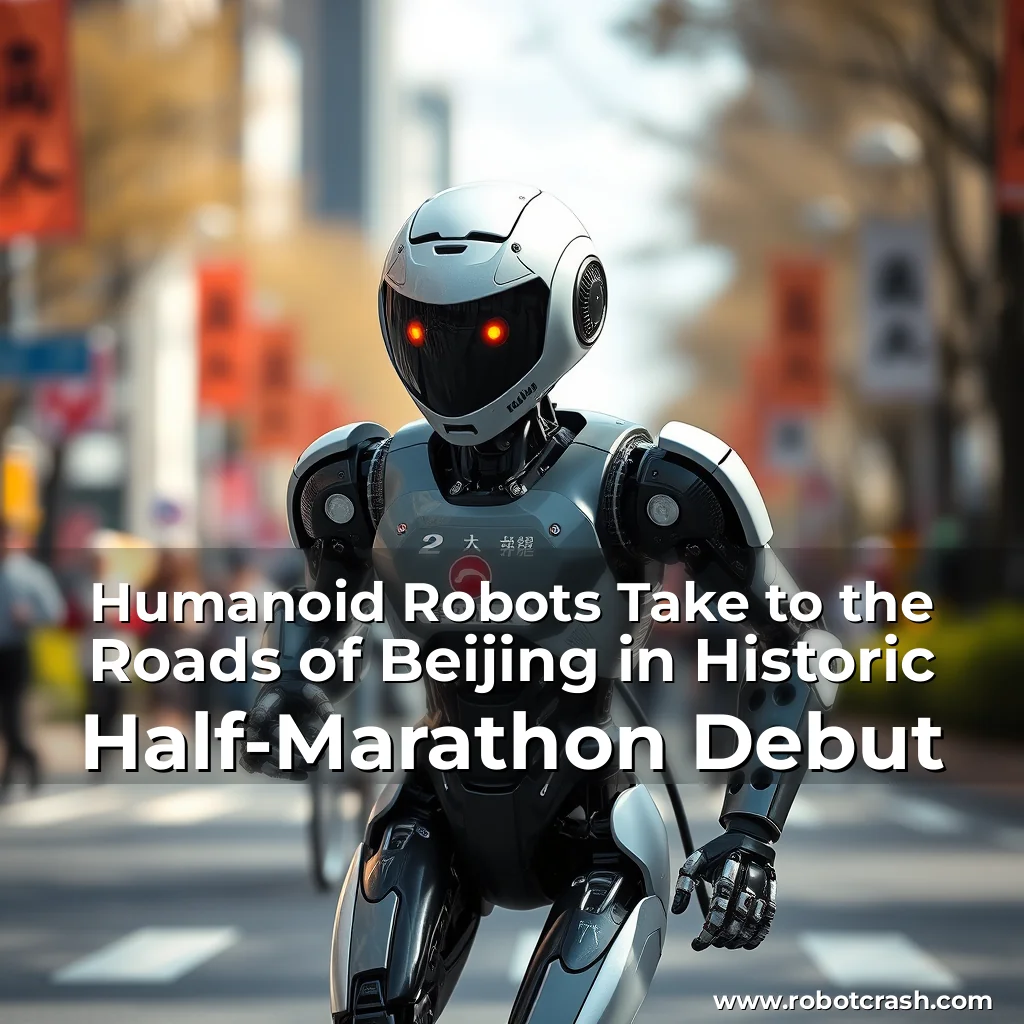
On a sun-drenched Saturday morning, a unique spectacle unfolded in Beijing’s Yizhuang district. Thousands of human runners, including many amateur athletes, lined up at the starting line of the half-marathon, while 21 humanoid robots joined the fray, marking the first time these machines have competed alongside humans over a 21-km course. The robots, designed and manufactured by Chinese companies such as DroidUP and Noetix Robotics, showcased their diversity in terms of size and design. Some stood at an astonishing 5.9 feet tall, while others were as compact as 3.9 feet in height. The varying dimensions were a testament to the innovative approaches of the manufacturers, who aimed to push the boundaries of what is possible with humanoid robots. A notable example was a robot designed to resemble a human female, complete with feminine features, the ability to wink and smile, and an almost indistinguishable appearance from its human counterparts. The robot’s creators claimed that they had spent weeks perfecting its design and functionality, ensuring that it was both aesthetically pleasing and capable of performing complex tasks. The robots were accompanied by their human trainers, some of whom had to provide physical support during the race. The trainers played a crucial role in helping the machines navigate the course, particularly during the more challenging sections. The presence of the human trainers also served as a reminder that, despite the advanced technology, the robots were not yet autonomous and required assistance to complete the race. Some of the robots wore functional attire, such as running shoes and boxing gloves, which added to the excitement and novelty of the event. One robot donned a red headband with the phrase “Bound to Win” in Chinese, striking a pose that would put even the most seasoned athletes to shame. The presence of these accessories served as a testament to the creative and innovative approaches of the manufacturers, who sought to add an extra layer of engagement and entertainment to the event. The winner of the half-marathon, Tiangong Ultra, from the Beijing Innovation Center of Human Robotics, crossed the finish line in a remarkable 2 hours and 40 minutes. The men’s winner, who completed the course in an impressive 1 hour and 2 minutes, was a testament to the enduring power of human athleticism. A table summarizing the results of the half-marathon is presented below:
| Rank | Robot Name | Time (hours:minutes) |
|---|---|---|
| 1 | Tiangong Ultra | 2:40 |
| 2 | Men’s Winner | 1:02 |
However, not all robots fared as well. Some struggled to complete the course, with one robot falling at the starting line and another crashing into a railing after a few meters. The human operators of these robots were seen trying to assist them, but ultimately, the machines were unable to keep pace with the human runners. Despite the challenges faced by some of the robots, the event served as a significant milestone for the development of humanoid robots. The participation of these machines in the half-marathon demonstrated their potential to be integrated into various industries and applications, including sports, entertainment, and even household chores. Analysts have questioned whether the participation of robots in marathons is a reliable indicator of their industrial potential. Professor Alan Fern, an expert in computer science, artificial intelligence, and robotics at Oregon State University, expressed skepticism about the significance of this event. According to Fern, the software enabling humanoid robots to run was developed and demonstrated over five years ago, and the focus on marathons and other demonstrations has diverted attention away from more practical applications. “A focus going forward for us will be industrial applications for humanoid robots, so they can truly enter factories, business scenarios, and finally households,” said Tang Jian, the chief technology officer of the Beijing Innovation Center of Human Robotics. As the robots continued to evolve and improve, it is likely that we will see them take on more complex and challenging tasks in the future. Whether they will be able to match the speed and agility of human athletes remains to be seen, but one thing is certain – the future of robotics is bright, and the possibilities are endless.
Key Takeaways:
- 21 humanoid robots participated in the half-marathon in Beijing, marking a historic milestone for the development of these machines.
- Chinese companies such as DroidUP and Noetix Robotics designed and manufactured the robots, showcasing their diversity in terms of size and design.
- The robots were accompanied by their human trainers, who provided physical support during the race.
- The winner of the half-marathon was Tiangong Ultra, which completed the course in 2 hours and 40 minutes.
- Analysts have questioned whether the participation of robots in marathons is a reliable indicator of their industrial potential.
In conclusion, the participation of humanoid robots in the half-marathon marked an exciting and significant milestone for the development of these machines. While there are still challenges to overcome, the potential applications of humanoid robots in various industries and applications are vast and exciting.