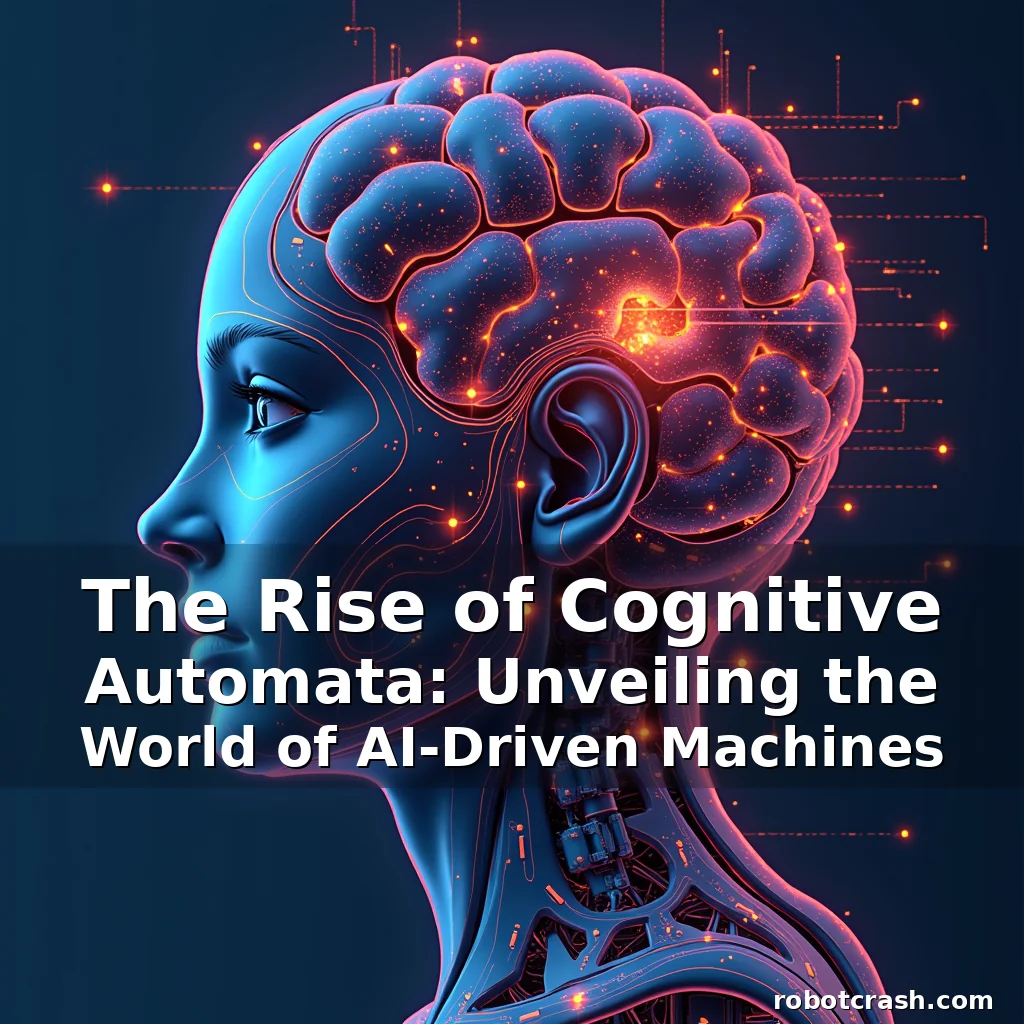
The Rise of Cognitive Automata: Unveiling the World of AI-Driven Machines
In an era where technology is rapidly reshaping our daily lives, AI-driven machines have emerged as transformative forces across industries ranging from healthcare to manufacturing. These intelligent systems are no longer confined to science fiction; they’re now integral components of modern infrastructure, performing tasks that once required human cognition.
This article explores how artificial intelligence has propelled machine capabilities beyond traditional automation, creating autonomous entities capable of learning, adapting, and making decisions based on complex data sets. As we delve deeper into this technological revolution, you’ll discover both the immense potential and pressing challenges these cognitive automata present.
Defining the New Era: What Are AI-Driven Machines?
At their core, AI-driven machines represent the convergence of robotics and machine learning algorithms. Unlike conventional automated systems programmed with fixed instructions, these advanced mechanisms use neural networks and deep learning models to process information dynamically.
This dynamic processing capability allows them to recognize patterns, interpret sensory inputs, and adjust behaviors without explicit programming. For instance, self-driving cars utilize computer vision techniques to identify road signs and pedestrians while continuously refining their decision-making processes through real-time data analysis.
The distinction between classical automation and AI-driven solutions lies primarily in adaptability. Traditional robotic arms on assembly lines follow pre-set trajectories, whereas AI-powered counterparts can modify grip strength based on object texture or reorient themselves when encountering unexpected obstacles.
- Adaptive Learning: Machine learning enables continuous improvement rather than static performance. Industrial robots equipped with reinforcement learning algorithms optimize production efficiency by analyzing past operations and adjusting future actions accordingly.
- Sensory Integration: Modern AI-driven machines incorporate multimodal sensors (visual, auditory, tactile) that allow contextual understanding similar to human perception. This integration facilitates more natural interactions between humans and machines in collaborative work environments.
Industrial Transformation: Revolutionizing Manufacturing Processes
The manufacturing sector stands at the forefront of AI implementation, experiencing unprecedented changes in productivity metrics and operational efficiencies. Smart factories now employ digital twins – virtual replicas of physical assets – to simulate production scenarios before actual implementation.
Digital twin technology reduces costly trial-and-error approaches by enabling predictive maintenance strategies. By monitoring equipment health parameters in real time, manufacturers can schedule repairs precisely when needed rather than adhering to rigid maintenance schedules.
Cognitive robots in automotive plants demonstrate remarkable versatility. They can switch between assembling car parts and inspecting finished products using built-in cameras and image recognition software. This flexibility significantly decreases downtime compared to dedicated machinery designed for single functions.
Data-Driven Decisions in Production
Machine learning algorithms analyze vast quantities of sensor data collected from factory floors to detect subtle anomalies indicative of impending failures. One study found that predictive maintenance implemented in semiconductor fabrication facilities reduced unplanned outages by up to 60%.
These analytics capabilities extend beyond mere fault detection. Advanced pattern recognition systems help identify quality inconsistencies during mass production. In food packaging lines, computer vision technologies sort defective items with greater accuracy than human inspectors ever could achieve.
Healthcare Innovations: Enhancing Patient Care Through Intelligent Systems
The medical field benefits immensely from AI-driven machines that augment diagnostic capabilities and streamline treatment protocols. Robotic surgical assistants perform minimally invasive procedures with sub-millimeter precision, reducing recovery times and minimizing complications.
Predictive analytics tools within hospital management systems anticipate patient needs by analyzing electronic health records alongside environmental factors. When combined with wearable IoT devices tracking vital signs, these systems enable early intervention in critical situations.
Telepresence robots facilitate remote consultations between specialists and patients located in underserved regions. Equipped with high-resolution video conferencing and interactive screens, these mobile units bridge geographical gaps in healthcare delivery.
Mental Health Applications
A growing number of mental health applications leverage AI to provide personalized therapeutic interventions. Chatbots powered by natural language processing engage users in cognitive behavioral therapy exercises tailored to individual psychological profiles.
These digital companions monitor mood fluctuations over time, offering adaptive support strategies. Research indicates that consistent interaction with AI-based mental health platforms leads to measurable improvements in symptoms associated with depression and anxiety disorders.
Ethical Considerations: Navigating the Moral Landscape of Cognitive Automata
As AI-driven machines become increasingly integrated into society, ethical dilemmas surrounding privacy, bias, and accountability demand careful consideration. The collection and utilization of personal data raise significant concerns regarding user consent and data security measures.
Bias embedded in training datasets poses another challenge. If historical employment data contains discriminatory patterns, AI recruitment systems might inadvertently perpetuate those biases unless actively corrected through algorithmic audits and diverse dataset curation.
Accountability frameworks must evolve to address liability issues arising from autonomous decision-making. Clear guidelines need to be established determining whether responsibility falls on developers, operators, or the machines themselves in case of malfunctions leading to harm.
Transportation Revolution: Redefining Mobility With Autonomous Vehicles
The transportation industry undergoes radical transformation thanks to AI-driven vehicles that promise safer roads and optimized traffic flow. Self-driving taxis navigate urban landscapes using lidar, radar, and camera arrays to create precise maps of their surroundings.
Autonomous public transit systems reduce operating costs by eliminating the need for human drivers while maintaining strict adherence to safety regulations. In cities implementing driverless buses, passenger satisfaction rates remain consistently high due to punctual arrivals and route optimization features.
Emergency response vehicles benefit from AI navigation systems that calculate optimal routes considering accident hotspots and weather conditions. These smart routing capabilities save crucial minutes during life-threatening emergencies such as cardiac arrests or trauma incidents.
Challenges in Urban Deployment
Despite promising advancements, widespread adoption faces hurdles related to regulatory compliance and cybersecurity threats. Governments worldwide debate legislation governing liability in accidents involving autonomous vehicles versus human-operated ones.
Hackers targeting vehicle control systems pose serious risks. Cybersecurity experts warn that vulnerabilities in telematics modules could potentially allow unauthorized access to braking systems or steering controls through network attacks.
Future Prospects: Where Will AI-Driven Machines Lead Us?
Ongoing research in quantum computing promises to unlock new dimensions of machine intelligence by processing information exponentially faster than current architectures. Such breakthroughs may eventually enable truly conscious AI systems capable of abstract thought processes.
Collaborative robots (cobots) will likely replace many industrial roles traditionally performed by humans. However, this shift necessitates workforce reskilling programs to ensure smooth transitions without exacerbating unemployment rates among displaced workers.
Space exploration missions benefit from AI assistance in managing long-duration journeys. Autonomous rovers on Mars collect geological samples and transmit findings back to Earth, paving the way for future interplanetary colonization efforts.
Preparing for Tomorrow’s Workforce
Education institutions must integrate AI literacy courses into curricula to equip students with necessary skills for emerging job markets. Understanding basic principles of machine learning and ethics becomes essential knowledge even for non-technical professions.
Corporate training departments invest heavily in upskilling initiatives focusing on human-AI collaboration techniques. Employees learn to complement machine capabilities rather than compete against them in various professional domains.
Governments play a pivotal role in shaping this transition through policy frameworks supporting innovation while safeguarding worker rights. Tax incentives encouraging companies to adopt AI responsibly contribute positively toward sustainable development goals.
Conclusion
The evolution of AI-driven machines represents one of humanity’s most profound technological revolutions. From enhancing industrial productivity to transforming healthcare delivery, these cognitive automata reshape every aspect of contemporary life.
To fully harness their potential while mitigating risks requires collective effort spanning technical expertise, ethical considerations, and societal adaptation. Embracing this change intelligently ensures that AI-driven machines serve as empowering tools rather than disruptive forces in our shared future.