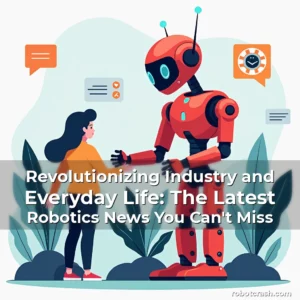
The Future is Here: Pioneering Innovations Shaping Robotics News Today
In an era where technology evolves faster than our ability to comprehend its implications, the field of robotics stands as both a beacon of innovation and a mirror reflecting humanity’s aspirations. From delicate surgical procedures performed by robotic arms to autonomous vehicles navigating complex urban landscapes, the latest developments in robotics are not only reshaping industries but also challenging our perceptions of what machines can achieve alongside humans.
This article delves deep into the most groundbreaking advancements reported within the dynamic realm of robotics news, providing readers with insightful analysis and up-to-date information that resonates with enthusiasts from various backgrounds—be they engineers working on next-gen prototypes or hobbyists eager to stay informed about cutting-edge trends shaping tomorrow’s world today.
Redefining Human-Machine Interaction through Collaborative Robots (Cobots)
Collaborative robots have emerged as game-changers across manufacturing floors worldwide, revolutionizing traditional assembly lines by enabling seamless human-machine cooperation without compromising safety standards. Unlike conventional industrial robots confined behind protective barriers due to their high-speed operations, cobots leverage advanced sensors and AI algorithms to detect potential collisions and adjust accordingly, ensuring safe interactions between workers and machines alike.
The integration of collaborative robots has significantly enhanced productivity while reducing physical strain on employees who previously had to perform repetitive tasks under physically demanding conditions. This shift towards coexistence rather than replacement marks a pivotal moment in labor dynamics within modern workplaces.
- Safety First: Cobots utilize force-limited actuators designed specifically for human interaction; these mechanisms ensure that any unintended contact results in minimal impact, protecting both personnel and equipment.
- Ease of Integration: With intuitive programming interfaces and modular designs, setting up new workflows involving cobots requires less technical expertise compared to legacy systems used before their introduction.
Moreover, companies adopting cobot technologies often experience quicker deployment times since training sessions focused solely on operating these intelligent assistants tend to be shorter than those required when implementing fully automated solutions requiring extensive retooling efforts.
Autonomous Vehicles and Their Impact on Transportation Systems
The advent of self-driving cars represents one of the most transformative innovations currently dominating robotics news headlines globally. These autonomous vehicles rely heavily on sophisticated sensor arrays—including LiDAR units, radar systems, and high-resolution cameras—to perceive their surroundings accurately and make real-time decisions regarding navigation routes, obstacle avoidance strategies, and adherence to traffic regulations.
Leading automotive manufacturers such as Tesla Motors Inc., Waymo LLC, and several startups specializing in mobility tech continue pushing boundaries by refining machine learning models capable of interpreting vast amounts of data collected during millions of miles driven autonomously. Such progress brings us closer to realizing fully functional driverless transportation networks that could redefine urban infrastructure layouts and reduce road fatalities attributed to human error.
Statistical Insights into Autonomous Vehicle Development
According to recent reports published by reputable organizations like McKinsey & Company and International Transport Forum, approximately 98% of all traffic accidents occur because of human mistakes related to driving behavior or distractions caused by mobile devices usage among drivers. By eliminating these variables entirely via automation, we stand poised to drastically cut down accident rates globally—an outcome deemed highly beneficial not just economically but also ethically concerning public welfare concerns surrounding vehicular incidents.
Furthermore, studies suggest that widespread adoption of electrically powered autonomous taxis could potentially decrease carbon emissions associated with personal vehicle ownership substantially over time. This environmental benefit aligns well with global climate change mitigation goals set forth by international bodies seeking sustainable development pathways forward.
Medical Robotics Revolutionizing Healthcare Delivery
Within healthcare settings, medical robotics continues making waves by enhancing precision levels achievable during minimally invasive surgeries while simultaneously minimizing recovery periods for patients undergoing complex procedures. Devices ranging from da Vinci Surgical System platforms employed in urological interventions to micro-manipulators utilized inside cramped spaces during neurosurgery exemplify how far-reaching applications exist for robotic assistance within clinical environments.
Recent breakthroughs involve integration of augmented reality visors worn by surgeons allowing them access to live patient vitals displayed directly onto transparent screens overlaid upon actual anatomical structures being operated upon—a technique known as AR-assisted surgery—which promises increased accuracy rates even further beyond current benchmarks established earlier this decade.
- Minimally Invasive Procedures: Robotic systems enable smaller incisions resulting in reduced post-operative pain management requirements and lower risk infection exposure rates typically observed following open-surgical approaches.
- Precision Control Enhancements: Utilization of haptic feedback loops provides physicians greater tactile awareness despite remotely controlled manipulations occurring outside direct physical reach; this feature proves invaluable especially during intricate tissue dissections where millimeter-level adjustments matter critically.
Additionally, telepresence capabilities now allow specialists located thousands of kilometers away from affected regions provide guidance remotely using immersive video conferencing tools combined with remote-controlled instruments situated right beside patients needing urgent care attention—a particularly useful application scenario amid ongoing challenges posed by geographic disparities limiting access quality healthcare services universally available everywhere equally.
Advances in Service Robotics Expanding Beyond Traditional Roles
No longer restricted merely to performing routine household chores or cleaning duties traditionally assigned to domestic servants, service robots nowadays showcase remarkable versatility catering diverse needs spanning hospitality sectors through eldercare facilities up until retail stores embracing digital transformation initiatives aimed improving customer experiences exponentially.
For instance, SoftBank Robotics’ Pepper humanoid companion recently gained traction among educators aiming foster interactive learning environments conducive younger generations developing essential social skills early stages life developmental milestones crucial cognitive growth trajectories ahead them later adulthood phases.
- Customer Engagement Solutions: Retail establishments increasingly deploy AI-powered kiosks equipped natural language processing engines facilitating smooth communication exchanges customers regardless regional dialect variations encountered daily transactions conducted businesses nationwide.
- Aging Population Support Services: Elderly care centers implement assistive devices aiding residents maintain independence routines including medication reminders meal preparation assistance bathing support thereby alleviating burdens caregivers struggling manage growing demographic shifts affecting workforce availability projections future decades.
Such multifaceted implementations underscore broader societal transformations underway thanks technological leaps propelling service robotics industry forward rapidly evolving landscape populated countless possibilities awaiting exploration realization soon enough.
Drones Transforming Industries Through Aerial Capabilities
Unmanned aerial vehicles commonly referred to as drones have transcended initial recreational purposes swiftly becoming indispensable assets numerous professional domains including agriculture forestry disaster response logistics delivery services etcetera. Equipped state-of-the-art imaging technologies coupled GPS positioning accuracy drone fleets execute survey missions efficiently collecting geospatial datasets vital decision-making processes involved land management practices executed governmental agencies private enterprises alike.
Furthermore agricultural sector benefits immensely employing multispectral sensors mounted onboard UAVs monitor crop health status identifying nutrient deficiencies pest infestations irrigation issues promptly addressing problems prevent yield losses significant economic repercussions faced farmers relying subsistence farming methodologies vulnerable unpredictable weather patterns seasonal fluctuations impacting harvest outcomes negatively.
- Disaster Response Applications: Emergency relief teams utilize drone swarms conduct rapid assessments damaged infrastructures post-natural calamities pinpoint locations survivors requiring immediate rescue operations thus saving precious minutes critical situations determining survival probabilities positively influencing casualty figures recorded aftermath events.
- Logistics Innovation: Companies experimenting last-mile delivery solutions leveraging lightweight package carrying capacities offered compact sized commercial quadcopters envisioning futuristic supply chain ecosystems optimized speed efficiency reliability surpassing limitations conventional ground transport modes constrained geographical obstacles terrain complexities.
As regulatory frameworks evolve accommodating increasing numbers airborne entities traversing skies responsibly maintaining airspace integrity simultaneously fostering entrepreneurship spirit innovators pursuing novel ventures capitalizing untapped markets emerging continuously thanks relentless pace advancement drone technology itself.
Education and Workforce Training in Robotics
The rise of robotics has sparked renewed interest in education programs aimed at preparing students for careers in STEM fields (Science, Technology, Engineering, Mathematics). Universities around the globe are integrating hands-on robotic projects into curricula, offering specialized degrees focusing exclusively on areas such as mechatronics engineering artificial intelligence ethics relating responsible use autonomous agents interacting society broadly.
Simultaneously vocational institutions partner industry leaders develop apprenticeship opportunities exposing participants practical applications theoretical knowledge acquired classrooms labs transforming abstract concepts tangible realities experienced firsthand working alongside professionals dedicated advancing frontiers scientific discovery technological implementation.
- Hands-On Learning Experiences: Students engage building programming controlling custom-built bots participating competitions judged criteria creativity functionality teamwork collaboration reinforcing core competencies demanded contemporary job market increasingly reliant digitized operational paradigms.
- Interdisciplinary Collaboration Opportunities: Cross-departmental initiatives encourage interdisciplinary research combining mechanical electrical computer science disciplines producing holistic understanding interdependencies existing within complex adaptive systems comprising multitude components functioning harmoniously achieve common objectives.
These educational endeavors not only cultivate skilled workforces ready tackle upcoming challenges arising rapid technological evolution but also nurture entrepreneurial mindsets necessary drive innovation cycles sustaining competitive advantage economies investing resources cultivating talent pools capable translating ideas viable products services meeting ever-changing consumer demands dynamically shifting geopolitical contexts.
Ethical Considerations Surrounding Advancement of Robotics Technologies
While marveling at incredible feats accomplished through robotic ingenuity, it becomes imperative address ethical dilemmas inherent expansion automation replacing human roles formerly considered irreplaceable elements societies fabric. Issues pertaining privacy surveillance capabilities embedded smart devices raise questions regarding individual freedoms protected constitutional rights upheld democratic governance structures established centuries ago remain relevant amidst unprecedented digital age ushered forth recent decades.
Moreover debates rage regarding liability assignments arising malfunctions catastrophic failures attributable faulty software coding errors hardware defects necessitating clear legal definitions governing accountability responsibilities stakeholders implicated incidents involving harm inflicted either people property dependent malfunctioning apparatuses deployed varied scenarios daily life encounters.
- Data Privacy Concerns: Increased reliance connected devices generating massive volumes sensitive user-generated content prompts stringent legislation regulating unauthorized access misuse personally identifiable information harvested unwittingly consumers utilizing convenience features provided gadgets appliances seamlessly integrated everyday activities.
- Workplace Displacement Debates: Automation threatens displace millions jobs globally prompting discussions policies implemented mitigate adverse effects displaced workers transition alternative employment sectors experiencing shortages skilled labor force adequately trained adapt emerging trends reshaping occupational landscapes permanently.
To navigate murky waters ethical quandaries confronting society, continuous dialogue amongst technologists policymakers ethicists citizens essential crafting balanced approach harnessing power robotics responsibly benefiting collective good rather exacerbating divides already widening socioeconomic inequalities prevalent developed nations third-world countries grappling resource constraints hindering equitable distribution wealth opportunities evenly.
Future Prospects and Emerging Trends in Robotics Research
Looking ahead, researchers speculate promising avenues exploration burgeoning subfields robotics encompass soft robotics biohybrid constructs swarm intelligence neural interface technologies. Each presents unique challenges rewards warranting substantial investment sustained effort realize full potential envisioned blueprints theoretical models conceived laboratories academia industry partners pooling resources accelerating translation discoveries commercial applications.
Soft robotics, characterized flexible materials mimicking biological organisms’ movements, opens doors myriad applications ranging wearable exoskeletons assisting individuals mobility impairments rehabilitation therapies enhancing dexterity fine motor control previously unattainable rigid counterparts. Meanwhile advances synthetic biology converge robotics giving birth biohybrid systems merging living tissues engineered circuits creating hybrids exhibiting characteristics neither wholly organic nor purely electronic nature.
- Swarm Intelligence Developments: Inspired insect colonies, swarm robotics explores decentralized coordination strategies enabling groups small autonomous agents accomplish complex tasks collectively without centralized command structures dictating every action taken each member group—potentially revolutionizing search-and-rescue missions large-scale construction projects requiring synchronized execution coordinated efforts.
- Neural Interface Innovations: Brain-computer interfacing techniques facilitate direct communication nervous system external computing devices allowing users control prosthetic limbs manipulate virtual objects mentally bypassing need traditional input methods keyboards mice touchscreens commonplace present-day interfaces.
With governments funding agencies allocating budgets supporting fundamental research applied sciences alike, anticipation mounts regarding paradigm-shifting breakthroughs imminent horizon promising reshape fundamental aspects existence humanity akin previous revolutions ignited electricity combustion engine internet connectivity fundamentally altering ways interact environment one another profoundly.
Community Engagement and Citizen Science in Robotics
Beyond academic circles corporate boardrooms, grassroots movements promoting democratization knowledge creation flourish vibrant communities passionate individuals contributing meaningful inputs shaping trajectory future technologies. Initiatives encouraging citizen participation design testing prototyping robotic inventions foster inclusive culture valuing diversity perspectives enriching innovation pipelines fueling next generation disruptive solutions never imagined possible otherwise.
Platforms hosting open-source repositories accessible global audiences facilitate sharing code schematics documentation freely enabling replication customization creations suited local needs preferences irrespective geographical location socioeconomic background. Such accessibility empowers marginalized populations gain foothold technological frontier historically excluded exclusionary practices entrenched elitism restricting access privileged few possessing requisite financial means acquiring expensive equipment consumables required pursue serious experimentation endeavors.
- Open Hardware Movements: Advocacy advocating affordable alternatives proprietary commercial offerings promote sustainability principles emphasizing repairability recyclability reducing e-waste generated disposable electronics culture perpetuated planned obsolescence strategies employed manufacturers maximizing profits short-term gains sacrificing long-term ecological consequences.
- Local Hackathons Competitions: Regular gatherings bring together coders makers inventors collaborate solve pressing issues facing communities through rapid prototyping cycles limited timelines pressurize participants deliver working models demonstrating feasibility proposed solutions addressing identified gaps current systems failing serve intended purposes effectively.
By nurturing participatory cultures celebrating curiosity creativity intrinsic human condition, we cultivate resilient societies adaptable changing circumstances thrive uncertainty rather succumb fear ignorance. This bottom-up approach ensures inclusivity equity central tenets guiding development paths forward guaranteeing nobody left behind march toward brighter tomorrows illuminated brilliance collective human endeavor united purpose advancing common good.
Conclusion
The world of robotics is undeniably undergoing a profound transformation, marked by innovations that challenge our imagination and redefine what was once thought impossible. As explored throughout this article, from collaborative robots enhancing workplace safety to autonomous vehicles reimagining transportation, each advancement signifies a step closer to a future where technology serves not just as a tool but as an integral part of our lives.
However, with great power comes great responsibility. The ethical considerations and societal impacts of these advancements cannot be overlooked. It is imperative that as we embrace the wonders of robotics, we also engage actively in conversations about their implications. By doing so, we can shape a future that leverages the strengths of robotics while safeguarding our values and priorities. Together, let’s embark on this journey of innovation with foresight and compassion, ensuring that the path we choose leads to a better world for everyone.
“`
“`html
The Future is Here: Pioneering Innovations Shaping Robotics News Today
In an era where technology evolves faster than our ability to comprehend its implications, the field of robotics stands as both a beacon of innovation and a mirror reflecting humanity’s aspirations. From delicate surgical procedures performed by robotic arms to autonomous vehicles navigating complex urban landscapes, the latest developments in robotics are not only reshaping industries but also challenging our perceptions of what machines can achieve alongside humans.
This article delves deep into the most groundbreaking advancements reported within the dynamic realm of robotics news, providing readers with insightful analysis and up-to-date information that resonates with enthusiasts from various backgrounds—be they engineers working on next-gen prototypes or hobbyists eager to stay informed about cutting-edge trends shaping tomorrow’s world today.
Redefining Human-Machine Interaction through Collaborative Robots (Cobots)
Collaborative robots have emerged as game-changers across manufacturing floors worldwide, revolutionizing traditional assembly lines by enabling seamless human-machine cooperation without compromising safety standards. Unlike conventional industrial robots confined behind protective barriers due to their high-speed operations, cobots leverage advanced sensors and AI algorithms to detect potential collisions and adjust accordingly, ensuring safe interactions between workers and machines alike.
The integration of collaborative robots has significantly enhanced productivity while reducing physical strain on employees who previously had to perform repetitive tasks under physically demanding conditions. This shift towards coexistence rather than replacement marks a pivotal moment in labor dynamics within modern workplaces.
- Safety First: Cobots utilize force-limited actuators designed specifically for human interaction; these mechanisms ensure that any unintended contact results in minimal impact, protecting both personnel and equipment.
- Ease of Integration: With intuitive programming interfaces and modular designs, setting up new workflows involving cobots requires less technical expertise compared to legacy systems used before their introduction.
Moreover, companies adopting cobot technologies often experience quicker deployment times since training sessions focused solely on operating these intelligent assistants tend to be shorter than those required when implementing fully automated solutions requiring extensive retooling efforts.
Autonomous Vehicles and Their Impact on Transportation Systems
The advent of self-driving cars represents one of the most transformative innovations currently dominating robotics news headlines globally. These autonomous vehicles rely heavily on sophisticated sensor arrays—including LiDAR units, radar systems, and high-resolution cameras—to perceive their surroundings accurately and make real-time decisions regarding navigation routes, obstacle avoidance strategies, and adherence to traffic regulations.
Leading automotive manufacturers such as Tesla Motors Inc., Waymo LLC, and several startups specializing in mobility tech continue pushing boundaries by refining machine learning models capable of interpreting vast amounts of data collected during millions of miles driven autonomously. Such progress brings us closer to realizing fully functional driverless transportation networks that could redefine urban infrastructure layouts and reduce road fatalities attributed to human error.
Statistical Insights into Autonomous Vehicle Development
According to recent reports published by reputable organizations like McKinsey & Company and International Transport Forum, approximately 98% of all traffic accidents occur because of human mistakes related to driving behavior or distractions caused by mobile devices usage among drivers. By eliminating these variables entirely via automation, we stand poised to drastically cut down accident rates globally—an outcome deemed highly beneficial not just economically but also ethically concerning public welfare concerns surrounding vehicular incidents.
Furthermore, studies suggest that widespread adoption of electrically powered autonomous taxis could potentially decrease carbon emissions associated with personal vehicle ownership substantially over time. This environmental benefit aligns well with global climate change mitigation goals set forth by international bodies seeking sustainable development pathways forward.
Medical Robotics Revolutionizing Healthcare Delivery
Within healthcare settings, medical robotics continues making waves by enhancing precision levels achievable during minimally invasive surgeries while simultaneously minimizing recovery periods for patients undergoing complex procedures. Devices ranging from da Vinci Surgical System platforms employed in urological interventions to micro-manipulators utilized inside cramped spaces during neurosurgery exemplify how far-reaching applications exist for robotic assistance within clinical environments.
Recent breakthroughs involve integration of augmented reality visors worn by surgeons allowing them access to live patient vitals displayed directly onto transparent screens overlaid upon actual anatomical structures being operated upon—a technique known as AR-assisted surgery—which promises increased accuracy rates even further beyond current benchmarks established earlier this decade.
- Minimally Invasive Procedures: Robotic systems enable smaller incisions resulting in reduced post-operative pain management requirements and lower risk infection exposure rates typically observed following open-surgical approaches.
- Precision Control Enhancements: Utilization of haptic feedback loops provides physicians greater tactile awareness despite remotely controlled manipulations occurring outside direct physical reach; this feature proves invaluable especially during intricate tissue dissections where millimeter-level adjustments matter critically.
Additionally, telepresence capabilities now allow specialists located thousands of kilometers away from affected regions provide guidance remotely using immersive video conferencing tools combined with remote-controlled instruments situated right beside patients needing urgent care attention—a particularly useful application scenario amid ongoing challenges posed by geographic disparities limiting access quality healthcare services universally available everywhere equally.
Advances in Service Robotics Expanding Beyond Traditional Roles
No longer restricted merely to performing routine household chores or cleaning duties traditionally assigned to domestic servants, service robots nowadays showcase remarkable versatility catering diverse needs spanning hospitality sectors through eldercare facilities up until retail stores embracing digital transformation initiatives aimed improving customer experiences exponentially.
For instance, SoftBank Robotics’ Pepper humanoid companion recently gained traction among educators aiming foster interactive learning environments conducive younger generations developing essential social skills early stages life developmental milestones crucial cognitive growth trajectories ahead them later adulthood phases.
- Customer Engagement Solutions: Retail establishments increasingly deploy AI-powered kiosks equipped natural language processing engines facilitating smooth communication exchanges customers regardless regional dialect variations encountered daily transactions conducted businesses nationwide.
- Aging Population Support Services: Elderly care centers implement assistive devices aiding residents maintain independence routines including medication reminders meal preparation assistance bathing support thereby alleviating burdens caregivers struggling manage growing demographic shifts affecting workforce availability projections future decades.
Such multifaceted implementations underscore broader societal transformations underway thanks technological leaps propelling service robotics industry forward rapidly evolving landscape populated countless possibilities awaiting exploration realization soon enough.
Drones Transforming Industries Through Aerial Capabilities
Unmanned aerial vehicles commonly referred to as drones have transcended initial recreational purposes swiftly becoming indispensable assets numerous professional domains including agriculture forestry disaster response logistics delivery services etcetera. Equipped state-of-the-art imaging technologies coupled GPS positioning accuracy drone fleets execute survey missions efficiently collecting geospatial datasets vital decision-making processes involved land management practices executed governmental agencies private enterprises alike.
Furthermore agricultural sector benefits immensely employing multispectral sensors mounted onboard UAVs monitor crop health status identifying nutrient deficiencies pest infestations irrigation issues promptly addressing problems prevent yield losses significant economic repercussions faced farmers relying subsistence farming methodologies vulnerable unpredictable weather patterns seasonal fluctuations impacting harvest outcomes negatively.
- Disaster Response Applications: Emergency relief teams utilize drone swarms conduct rapid assessments damaged infrastructures post-natural calamities pinpoint locations survivors requiring immediate rescue operations thus saving precious minutes critical situations determining survival probabilities positively influencing casualty figures recorded aftermath events.
- Logistics Innovation: Companies experimenting last-mile delivery solutions leveraging lightweight package carrying capacities offered compact sized commercial quadcopters envisioning futuristic supply chain ecosystems optimized speed efficiency reliability surpassing limitations conventional ground transport modes constrained geographical obstacles terrain complexities.
As regulatory frameworks evolve accommodating increasing numbers airborne entities traversing skies responsibly maintaining airspace integrity simultaneously fostering entrepreneurship spirit innovators pursuing novel ventures capitalizing untapped markets emerging continuously thanks relentless pace advancement drone technology itself.
Education and Workforce Training in Robotics
The rise of robotics has sparked renewed interest in education programs aimed at preparing students for careers in STEM fields (Science, Technology, Engineering, Mathematics). Universities around the globe are integrating hands-on robotic projects into curricula, offering specialized degrees focusing exclusively on areas such as mechatronics engineering artificial intelligence ethics relating responsible use autonomous agents interacting society broadly.
Simultaneously vocational institutions partner industry leaders develop apprenticeship opportunities exposing participants practical applications theoretical knowledge acquired classrooms labs transforming abstract concepts tangible realities experienced firsthand working alongside professionals dedicated advancing frontiers scientific discovery technological implementation.
- Hands-On Learning Experiences: Students engage building programming controlling custom-built bots participating competitions judged criteria creativity functionality teamwork collaboration reinforcing core competencies demanded contemporary job market increasingly reliant digitized operational paradigms.
- Interdisciplinary Collaboration Opportunities: Cross-departmental initiatives encourage interdisciplinary research combining mechanical electrical computer science disciplines producing holistic understanding interdependencies existing within complex adaptive systems comprising multitude components functioning harmoniously achieve common objectives.
These educational endeavors not only cultivate skilled workforces ready tackle upcoming challenges arising rapid technological evolution but also nurture entrepreneurial mindsets necessary drive innovation cycles sustaining competitive advantage economies investing resources