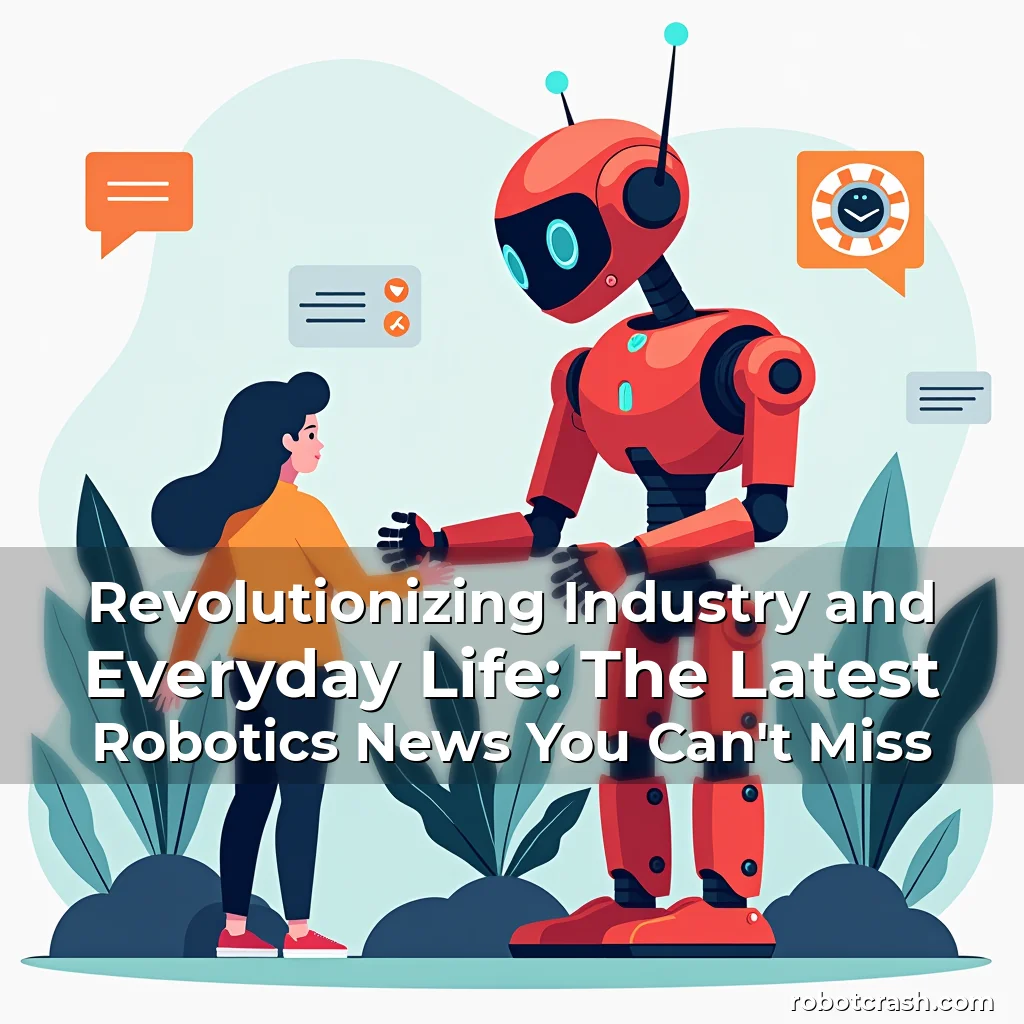
Revolutionizing Industry and Everyday Life: The Latest Robotics News You Can’t Miss
In 2023, the world of robotics has witnessed unprecedented growth, driven by rapid advancements in artificial intelligence, machine learning, and human-robot collaboration. From autonomous vehicles navigating complex urban environments to precision surgical robots performing life-saving procedures, robotics continues to redefine industries and reshape daily routines. This surge in innovation underscores why staying informed about the latest developments is essential for professionals, enthusiasts, and anyone curious about technology’s role in our evolving society.
The intersection of robotics and emerging fields like quantum computing, biotechnology, and renewable energy promises groundbreaking solutions to global challenges. As new startups emerge alongside established giants, the pace of progress accelerates, making now an ideal time to explore what’s shaping the future of robotics through the lens of cutting-edge news and discoveries.
Breakthroughs in Humanoid Robotics and General-Purpose Machines
One of the most captivating areas of robotics development today centers around humanoid machines capable of performing tasks typically reserved for humans. Companies like Boston Dynamics, Tesla, and Unitree Robotics have made significant strides, showcasing prototypes that mimic natural movement patterns with remarkable accuracy. These systems are no longer confined to laboratories—they’re being tested in warehouses, disaster response scenarios, and even educational settings.
The rise of general-purpose robots marks a paradigm shift in how we perceive automation. Unlike specialized industrial bots designed for single functions, modern platforms integrate vision-based navigation, dexterous manipulation, and contextual awareness. Researchers at MIT and Stanford have demonstrated systems that can adapt to unpredictable environments, opening doors to applications ranging from elder care to space exploration.
- Mobility Innovations: New actuator designs enable smoother motion and greater flexibility, allowing robots to traverse uneven terrain previously deemed inaccessible.
- Sensory Advancements: Enhanced tactile feedback mechanisms provide nuanced environmental interaction, enabling robots to handle delicate objects with precision.
Healthcare Robotics Reaches New Heights
The medical sector remains one of the fastest-growing domains for robotic application. Surgical robots now perform minimally invasive procedures with sub-millimeter accuracy, reducing recovery times and improving patient outcomes. Recent clinical trials have shown promising results with robotic-assisted neurosurgery, where tremor reduction features allow surgeons to operate with unprecedented stability.
Beyond operating rooms, hospital logistics is undergoing transformation. Autonomous mobile robots deliver medications, transport lab samples, and disinfect surfaces using UV light technology. In Japan, nursing homes employ companion robots to monitor residents’ health metrics and provide emotional support—a trend likely to expand globally as aging populations increase demand for innovative caregiving solutions.
Personalized Healthcare Through Robotic Innovation
Recent studies indicate that personalized medicine powered by robotic systems could revolutionize treatment protocols. By integrating genomic analysis with robotic therapy devices, doctors can tailor rehabilitation programs to individual patients’ needs. One notable project at Johns Hopkins University uses exoskeletons equipped with AI-driven sensors to optimize physical therapy regimens for stroke survivors.
The convergence of wearables and medical robotics is also yielding impressive results. Smart prosthetics featuring neural interfaces now respond to brain signals with near-natural dexterity, offering amputees unprecedented control over their movements. These advances highlight how robotics isn’t just enhancing existing treatments—it’s redefining possibilities in healthcare delivery.
Agricultural Robotics: Feeding the World More Sustainably
Farmers worldwide are embracing robotic solutions to address labor shortages and climate change impacts. Automated harvesters, drone swarms for crop monitoring, and precision irrigation systems represent a paradigm shift toward sustainable food production. California vineyards, for instance, utilize AI-powered robots to detect disease outbreaks before they spread, minimizing pesticide use while maximizing yield quality.
Robotics is also transforming livestock management practices. Dairy farms in Europe employ automated milking stations that analyze cow behavior to predict health issues early. Meanwhile, poultry operations benefit from robotic feeders that adjust nutrient ratios based on flock performance metrics, optimizing resource efficiency without compromising animal welfare standards.
The Future of Work: Robots and Employment Redefined
As automation becomes increasingly prevalent, discussions around job displacement versus creation intensify. While some roles may become obsolete, new opportunities arise in robot maintenance, programming, and oversight positions. Countries like Germany and South Korea actively invest in workforce reskilling initiatives to prepare citizens for this technological transition.
The gig economy is also adapting to incorporate robotics. Delivery services now rely on fleets of self-driving electric vehicles and drones to meet rising consumer demands. Platforms like Amazon and Uber Eats continue expanding their autonomous delivery networks, demonstrating how robotics can coexist with traditional employment models when properly integrated into economic frameworks.
Ethical Considerations in Workplace Automation
With increased reliance on robotic workers comes heightened scrutiny regarding ethical implications. Issues such as algorithmic bias in hiring decisions, privacy concerns related to workplace surveillance, and potential dehumanization effects require thoughtful regulation. Experts advocate for transparent AI governance policies that balance innovation incentives with social responsibility obligations.
Labor unions and policymakers collaborate to establish fair compensation structures for jobs affected by automation. Some regions implement universal basic income experiments aimed at mitigating economic disruption caused by widespread mechanization. These efforts underscore the importance of proactive policy-making in shaping equitable futures amidst technological progress.
Space Exploration: Pioneering the Final Frontier with Robotics
Rovers traversing Martian landscapes, satellites maintaining geostationary orbits, and robotic arms assembling orbital habitats—all exemplify how space agencies leverage robotics to overcome extreme conditions. NASA’s Perseverance rover recently collected rock samples destined for Earth, marking another milestone in interplanetary sample return missions.
Private companies contribute significantly to this domain too. SpaceX’s Starship program incorporates autonomous landing systems designed to withstand harsh atmospheric entry conditions. Blue Origin develops lunar lander prototypes featuring advanced sensor suites for safe planetary touchdowns. Collaborative ventures between governments and commercial entities accelerate technological breakthroughs vital for deep-space exploration endeavors.
Education and Research: Cultivating Tomorrow’s Technologists
Academic institutions play a pivotal role in advancing robotics through interdisciplinary research programs. Universities offer hands-on training via maker spaces equipped with 3D printers, laser cutters, and microcontroller kits. Students engage in projects spanning from swarm robotics simulations to soft-bodied machine design, preparing them for careers at the forefront of innovation.
Global competitions like the International Aerial Robotics Competition challenge teams to develop flying robots with novel capabilities. Such events foster creativity, problem-solving skills, and international collaboration among participants representing diverse backgrounds. These experiences help cultivate a generation poised to tackle tomorrow’s technical challenges head-on.
Entertainment and Creativity: Robots in Art, Music, and Film
Robotics extends far beyond utilitarian purposes; it’s reshaping creative expression itself. Artists experiment with kinetic sculptures that move autonomously, musicians compose symphonies performed by mechanical instruments, and filmmakers deploy animatronics to bring fantastical creatures to life. The Tokyo Robot Restaurant exemplifies this fusion of artistry and engineering through its elaborate performances involving synchronized dancing robots.
Gaming consoles feature haptic feedback suits that translate virtual actions into tangible sensations. Interactive exhibits at museums allow visitors to manipulate digital worlds through gesture recognition systems. These innovations demonstrate how robotics enhances entertainment experiences by bridging the gap between imagination and reality.
Environmental Conservation: Protecting Our Planet with Intelligent Systems
Robots serve as invaluable allies in preserving ecosystems facing existential threats. Underwater drones map coral reef degradation, while aerial surveyors track deforestation rates using high-resolution imaging techniques. Waste management facilities employ sorting robots capable of identifying recyclable materials with near-perfect accuracy, boosting sustainability efforts globally.
Wildlife conservationists use GPS-tagged tracking devices attached to animals to study migration patterns and combat poaching activities. Solar-powered robots patrol protected areas, collecting ecological data that informs habitat restoration strategies. These tools empower scientists to make evidence-based decisions crucial for long-term environmental stewardship.
Home Automation and Personal Assistants: Making Daily Life Smarter
Smart home technology has evolved dramatically, integrating voice-controlled assistants with robotic functionalities. Vacuum cleaners navigate obstacle-filled floors independently, while kitchen appliances preheat ovens according to meal preparation schedules. Security systems combine facial recognition software with automated gate access controls for enhanced safety measures.
Emerging products promise even greater convenience. Robotic companions assist elderly individuals with medication reminders and fall detection alerts. Gardening robots automatically water plants based on soil moisture levels detected through embedded sensors. These innovations reflect growing demand for seamless integration of robotics into everyday living spaces.
Challenges Facing Modern Robotics Development
Despite remarkable achievements, several hurdles impede wider adoption of robotic technologies. High initial costs remain prohibitive for small businesses seeking automation solutions. Technical limitations persist regarding battery longevity, computational power constraints, and reliability in uncontrolled environments.
Regulatory frameworks often lag behind technological advancement, creating uncertainty around liability issues associated with autonomous decision-making processes. Public perception shaped by media portrayals sometimes fuels skepticism towards beneficial applications, necessitating better education campaigns about responsible deployment practices.
The Road Ahead: What Lies Beyond Current Horizons?
Looking forward, researchers anticipate exciting developments in neuromorphic engineering—an approach mimicking biological nervous system functionality to create more adaptive robots. Quantum-inspired algorithms may soon enable faster processing speeds, while biohybrid systems combining organic tissue with synthetic components open new frontiers in medical science.
Cross-disciplinary collaborations between engineers, ethicists, sociologists, and artists will shape how future generations interact with intelligent machines. Establishing global standards for safety certifications and interoperability protocols will facilitate cross-border innovation sharing without compromising security concerns.
Conclusion
This overview illustrates how robotics permeates nearly every facet of contemporary existence—from healing wounds inside operating theaters to exploring alien planets. The trajectory suggests continued acceleration rather than stagnation, emphasizing the importance of remaining vigilant about upcoming innovations shaping our collective future.
To stay ahead of these changes, consider subscribing to leading journals, attending conferences focused on applied robotics research, or joining online communities dedicated to exchanging knowledge about emerging technologies. Engaging actively with this dynamic field ensures you don’t miss out on revolutionary shifts that could transform your personal or professional landscape forever.