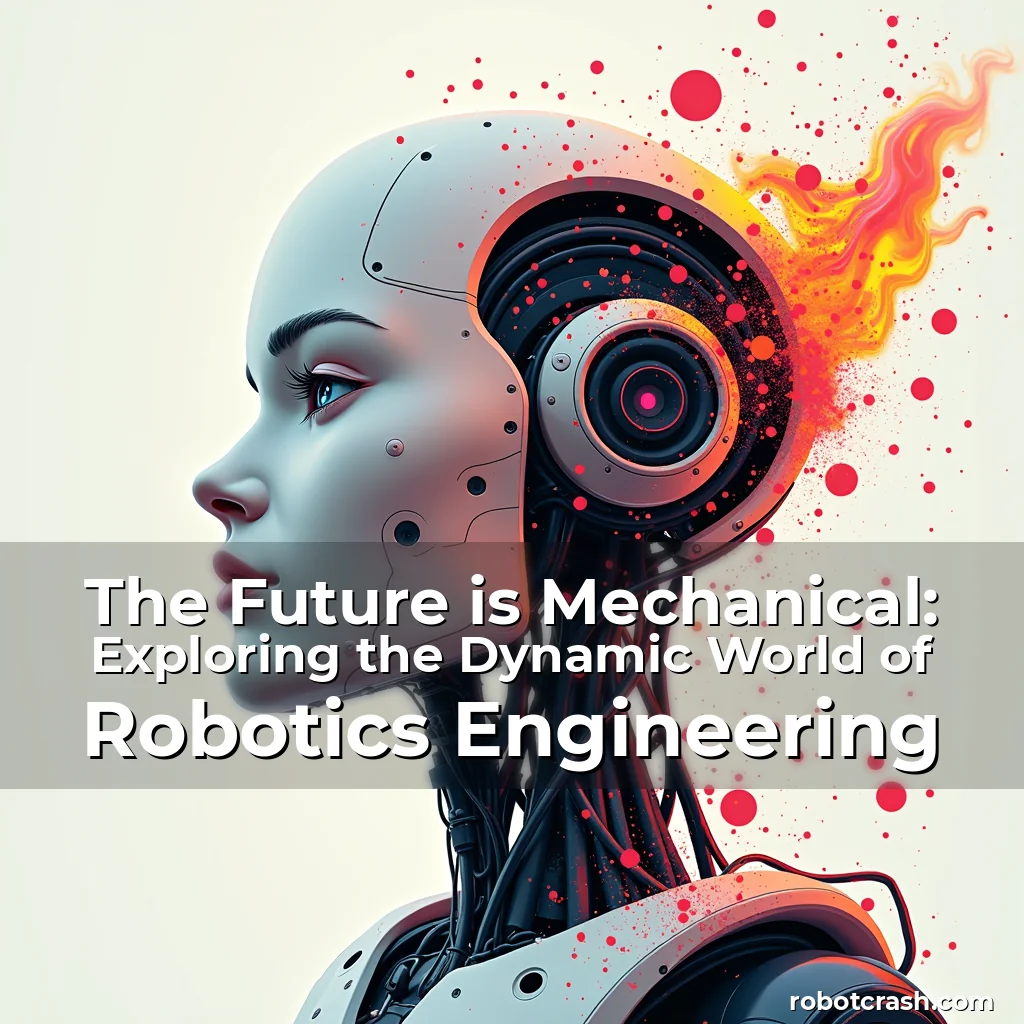
The Future is Mechanical: Exploring the Dynamic World of Robotics Engineering
In an era where technology advances at breakneck speed, robotics engineering stands as a beacon of innovation that reshapes industries from healthcare to manufacturing. This interdisciplinary field merges mechanical engineering, electrical systems, computer science, and artificial intelligence to create machines capable of performing tasks once reserved for humans.
Robotics engineering isn’t merely about building robots; it’s about solving complex problems through intelligent automation. As we delve deeper into this fascinating domain, we’ll uncover its core principles, career pathways, educational requirements, and future trends shaping our world today.
Fundamentals of Robotics Engineering
At its heart, robotics engineering involves designing, constructing, and operating robots that can perform physical tasks autonomously or semi-autonomously. These machines are engineered with precision mechanisms, advanced sensors, and robust software algorithms working in harmony to achieve their objectives efficiently.
One essential component within robotic systems is the actuator – these devices convert energy into motion, enabling robots to manipulate objects, move around environments, and interact physically with surroundings. From electric motors used in industrial arms to hydraulic actuators found in construction machinery, each type serves specific purposes based on application needs.
- Sensors: Provide critical data inputs such as visual information (via cameras), proximity detection (using LIDAR), force measurement (through strain gauges), etc., allowing robots to perceive their environment accurately.
- Control Systems: Act as the brain behind every action performed by a robot; they process sensor feedback using sophisticated control theories ranging from PID controllers to machine learning models which enable adaptive behavior over time.
Programming plays an equally vital role since even well-designed hardware requires intelligent instruction sets tailored specifically towards achieving desired outcomes reliably under varying conditions without human intervention most times.
Educational Pathways in Robotics Engineering
Becoming proficient in robotics typically begins with obtaining foundational knowledge through formal education programs designed explicitly for aspiring engineers looking forward into this lucrative sector. A bachelor’s degree focusing primarily on mechatronics engineering often provides students exposure across various disciplines relevant here including electronics & communication technologies alongside traditional civil works methodologies.
Many universities offer specialized tracks within general engineering degrees emphasizing hands-on projects involving real-world applications thus preparing graduates effectively for careers dealing directly with automated solutions development processes both academically grounded yet practically oriented simultaneously.
Courses Offered During Undergraduate Studies
Degree curricula commonly include subjects like Dynamics Of Machinery which explores forces acting upon moving parts crucial during design stages ensuring durability against wear-and-tear caused by repetitive motions typical among assembly line units especially those deployed continuously night after day nonstop operation cycles.
Additionally courses covering Digital Signal Processing help understand how signals generated by different types of sensors need processing before being utilized meaningfully inside decision making frameworks implemented via embedded microcontrollers located strategically throughout robotic bodies facilitating timely responses whenever necessary conditions arise unexpectedly amidst operational sequences.
Students also engage extensively with Artificial Intelligence modules teaching them algorithmic approaches useful when creating self-learning capabilities required nowadays particularly within service-oriented bots expected operate independently while adapting dynamically according to changing scenarios encountered frequently outside controlled lab settings.
To complement theoretical learnings practical experience gained through internships or capstone projects becomes indispensable providing direct interface between classroom concepts taught abstractly versus actual implementation challenges faced daily onsite working closely alongside experienced professionals already established firmly rooted deep inside industry ecosystems ready welcoming newcomers eager contribute fresh perspectives fueled passion driving further advancements possible only through collaborative efforts spanning multiple generations coexisting harmoniously sharing resources mutually benefiting everyone involved regardless age differences present naturally everywhere globally irrespective geographical boundaries separating nations cultures languages spoken commonly accepted universally recognized standard units measurements adopted worldwide enhancing interoperability significantly reducing barriers preventing smooth integration otherwise would hinder progress considerably hampering potential growth trajectories available exclusively due existence thriving communities devoted pushing envelopes beyond current limitations consistently striving exceed expectations regularly surpassing previous benchmarks set earlier establishing new ones continually evolving never static always improving perpetually advancing ever onwards reaching higher peaks previously deemed unreachable now achievable thanks relentless pursuit excellence driven desire explore unknown territories boldly venture forth embrace uncertainties inherent nature discovery itself.
Career Opportunities Within Robotics Engineering
The demand for skilled robotics engineers continues rising sharply across diverse sectors notably manufacturing, healthcare, agriculture, logistics, defense, and entertainment. Positions range widely encompassing roles such as Automation Engineers responsible for developing efficient production lines minimizing errors maximizing output quality standards maintained rigorously throughout entire lifecycle product creation phases beginning conceptualization ending final disposal procedures followed meticulously ensuring sustainability aspects considered thoroughly right from initial planning stages onward avoiding waste generation promoting eco-friendly practices wherever feasible applicable aligning corporate goals environmental regulations enforced strictly by governmental agencies monitoring compliance levels periodically auditing operations verifying adherence protocols maintained consistently over extended durations guaranteeing long-term viability enterprises operating profitably ethically contributing positively society at large.
Another prominent area includes Research Scientists engaged deeply investigating novel materials suitable usage within next-gen robotic structures aiming enhance flexibility strength longevity compared conventional alternatives currently prevailing market despite high costs associated breakthrough innovations promising substantial returns investment made wisely calculated risks undertaken carefully balancing financial prudence scientific curiosity pushing frontiers constantly expanding horizons possibilities opening doors unprecedented opportunities emerging continuously challenging existing paradigms redefining what considered possible impossible yesterday become reality today tomorrow.
Furthermore there exists growing interest surrounding Educational Institutions seeking qualified individuals capable mentoring future innovators equipping them necessary tools skills launching successful careers eventually becoming leaders themselves influencing policies shaping directions taken fields progressing rapidly requiring constant adaptation staying updated latest developments happening globally keeping pace changes occurring swiftly demanding agility responsiveness characteristics highly valued employers prioritizing candidates demonstrating ability thrive dynamic competitive landscapes characterized unpredictability volatility necessitating strategic foresight anticipating shifts proactively adjusting strategies accordingly maintaining relevance amidst chaos order arising naturally whenever technological revolutions occur periodically disrupting status quo forcing reinvention survival imperative for organizations individuals alike must face head-on courageously embracing change rather resisting it futilely trying hold onto outdated methods obsolete soon rendered useless replaced superior alternatives offering better performance efficiency reliability features unattainable former versions lacked entirely.
Entrepreneurs too find fertile ground exploring entrepreneurial ventures capitalizing off burgeoning markets ripe exploitation leveraging cutting edge research findings commercialized appropriately generating revenue streams supporting continued R&D initiatives feeding back loop accelerating cycle innovation diffusion adoption rates increasing exponentially owing synergy created between academia industry private sectors collaborating closely fostering ecosystem conducive nurturing groundbreaking ideas transforming visions tangible products services meeting genuine societal needs addressing pressing issues confronting humanity collectively facing together united purpose shared vision brighter tomorrow built upon solid foundation laid down painstaking effort dedication countless researchers developers pioneers sacrificing comfort pursuing dreams turning imagination reality impacting lives immeasurably forever altering course history.
Emerging Trends Shaping Robotics Engineering Landscape
Artificial Intelligence Integration has emerged paramount significance recent years revolutionizing traditional approaches formerly relied solely pre-programmed instructions executed rigidly regardless circumstances encountered. Now AI enables robots adaptively respond stimuli dynamically modifying behaviors according contextual clues received instantly processed analyzed determining optimal actions taking place seamlessly without requiring explicit programming upfront detailing exhaustive scenarios imaginable conceivable beforehand.
This shift brings immense benefits particularly safety-critical applications where rapid decision-making abilities could mean difference life death situations such disaster response units tasked entering hazardous zones retrieving survivors rescuing trapped personnel executing salvage missions requiring split-second judgments assessing risks evaluating options selecting best course action swiftly accurately precisely eliminating guesswork ambiguity inherent manual assessments prone error subjectivity bias potentially leading catastrophic consequences if misjudged critically dangerous environments inherently unpredictable volatile unpredictable factors numerous unpredictable variables interplaying simultaneously complicating matters severely restricting human capacity manage situations alone hence necessity autonomous systems equipped cognitive faculties comparable human intuition judgment discernment necessary navigate complexities effortlessly.
Moreover Collaborative Robots (Cobots) represent another transformative trend gaining traction especially small-to-medium sized businesses unable afford expensive fully automated systems initially. Unlike traditional industrial robots confined restricted workspaces operated remotely Cobots designed collaborate safely alongside humans intuitively sensing presence adjusting movements accordingly preventing accidents injuries thereby democratizing access automation empowering workforce augmenting productivity rather replacing it altogether fostering symbiotic relationships enhancing overall workplace efficiency morale satisfaction stemming mutual respect trust developed through consistent positive interactions reinforcing cultural values teamwork cooperation inclusiveness promoting holistic organizational health thriving ecosystems flourishing naturally organically without external interference artificially imposed constraints stifling creativity innovation扼杀自然发展过程。
Simultaneously Soft Robotics introduces paradigm shift departure conventional hard metallic constructs toward flexible organic-like designs mimicking biological organisms’ properties enabling manipulation delicate fragile items impossible grasp using rigid grippers. Applications span medical fields surgical assistants handling tissue samples gently pharmaceuticals dispensing precise dosages agricultural harvesting fruits vegetables without damaging integrity preserving freshness extending shelf-life reducing spoilage losses economically beneficial environmentally sustainable solution aligning business ethics ecological responsibility simultaneously achieving dual objectives synergistically.
Lastly Swarm Robotics draws inspiration nature observing collective behaviors exhibited insect colonies bees ants termites functioning cooperatively accomplishing tasks individually incapable managing alone. By applying similar principles programmatically controlling swarms individual entities interacting locally following simple rules producing emergent global patterns highly adaptable scalable easily expanded reduced costs dramatically compared single-unit counterparts making ideal suited mass customization scenarios requiring parallel processing distributed computing architectures prevalent modern digital infrastructures.
Challenges Facing Modern Robotics Engineers Today
Despite remarkable achievements attained so far several formidable obstacles persist impeding full realization potential promised by robotic technologies. One primary challenge relates Ethical Considerations concerning deployment autonomous weapons systems raising concerns regarding accountability liability when things go wrong resulting unintended harm innocent civilians caught crossfire escalating geopolitical tensions threatening global stability peace requiring international consensus regulating use military contexts preventing abuse power concentrated few entities capable wielding destructive capabilities recklessly irresponsibly endangering millions lives unnecessarily.
Another significant hurdle lies Legal Frameworks governing liabilities incurred accidents malfunctions attributed either faulty hardware software coding defects negligence maintenance routines insufficient training operators unfamiliar equipment nuances leading disastrous outcomes. Establishing clear-cut regulations assigning responsibilities fairly remains contentious issue jurisdictions vary greatly legal interpretations diverge widely complicating resolution disputes arising frequently across borders necessitating harmonized standards universally acceptable mitigating conflicts arising jurisdictional discrepancies hindering seamless cross-border collaborations integral globalization era interconnected economies dependent supply chains vulnerable disruptions anywhere affecting everywhere.
Technological Limitations continue pose serious restrictions especially Power Consumption Efficiency remaining bottleneck limiting operational duration autonomy unless tethered continuous charging stations restricting mobility scope deployments remote locations requiring prolonged independent functions. Current battery technologies struggle meet demands intensive computations sensory processing simultaneous execution multifaceted tasks draining energy reserves quickly necessitating frequent replacements posing logistical nightmares particularly harsh climates extreme temperatures humidity levels degrading performance lifespan components prematurely.
Interoperability Issues further complicate matters significantly disparate platforms proprietary formats hindering communication compatibility between varied robotic systems manufactured different vendors utilizing distinct protocols interfaces making integration difficult cumbersome often requiring custom middleware development bridging gaps inefficient costly delaying project timelines budget overruns frustrating stakeholders invested substantial resources expecting seamless functionalities out-of-the-box instead encountering unexpected roadblocks undermining confidence trust in vendor capabilities prompting calls standardized open-source frameworks encouraging collaboration transparency sharing knowledge freely accelerating innovation cycles reducing redundancies duplicating efforts squandered precious time money talents.
Finally Societal Acceptance presents final major obstacle permeating acceptance robots everyday life partially due fear obsolescence job displacement apprehensions losing livelihoods to machines rendering human labor redundant obsolete. Addressing these anxieties requires proactive measures educating public understanding true nature robots augmenting rather than replacing workforce highlighting complementary roles creating new jobs requiring skillsets previously nonexistent thereby alleviating worries transforming resistance into enthusiasm fostering inclusive societies embracing change gracefully smoothly transitioning smoothly.
Pioneers And Innovators In Robotics Engineering Field
History of robotics is rich tapestry woven contributions multitude visionary thinkers whose pioneering works laid groundwork contemporary marvels witnessed today. Among earliest figures worth mentioning is Nikola Tesla who although primarily known electricity magnetism played pivotal role early explorations automation through inventions like his AC induction motor laying foundation later developments electromechanical systems central many robotic applications nowadays.
Marcus Ranum deserves credit inventing first programmable robot named Unimate introduced General Motors factory 1961 marking dawn industrial automation epoch. This revolutionary device performed die casting task repeatedly without fatigue setting precedent subsequent generations robots programmed execute myriad tasks precisely efficiently vastly improving productivity rates lowering manufacturing costs drastically transforming economic landscape forevermore.
George Devol father modern robotics filed patents 1954 conceiving idea machines capable carrying out predetermined sequences motions later termed “programmable sequential control.” His company Universal Robotics partnered with IBM develop first commercially viable model ushering age mechanized labor liberation workers from monotonous grueling manual tasks redirecting energies toward creative endeavors enhancing quality life overall.
More recently Rodney Brooks founded iRobot Corporation launched Roomba vacuum cleaner showcasing household utility robots accessible consumers masses. Through innovative navigation algorithms inspired ant colony optimization techniques his team managed create compact unit able map clean spaces autonomously proving concept domestic automation feasible enjoyable experiential aspect besides functional benefit.
Jennifer Doudna and Emmanuelle Charpentier though primarily biologists contributed indirectly through CRISPR-Cas9 gene editing tool enabling bioengineered tissues integrated robotic prosthetics restoring functionality amputees paralyzed patients revolutionizing medical rehabilitation prospects significantly.
Last but certainly not least Elon Musk through Neuralink initiative seeks merge human consciousness machine interfaces aiming overcome neural degradation diseases ultimately endowing cyborg capabilities surpassing natural limits achieved biological evolution granting enhanced perception cognition interaction capabilities fundamentally altering human-machine relationship forging new species hybrid existence transcending traditional definitions life itself.
Future Prospects For Robotics Engineering Professionals
Looking ahead decade two three foreseeable future robotics engineering promises exponential growth trajectory propelled continual advancement AI ML IoT cloud computing converging forces redefining possibilities hitherto unimaginable. With smarter more versatile robots infiltrating every facet existence from personal assistants managing household chores predicting weather anomalies suggesting optimal routes travel to space exploration vehicles navigating asteroid belts searching extraterrestrial signs life expanding human reach cosmos indefinitely.
Education sector anticipates surge demand educators specialists versed latest trends pedagogical strategies incorporating immersive virtual reality augmented reality simulations fostering experiential learning environments cultivating next wave innovators adept tackling grand challenges awaiting solutions. Universities colleges likely invest heavily upgrading facilities acquiring state-of-art laboratories stocked prototypes kits encouraging student participation competitions hackathons nurturing spirit entrepreneurship risk-taking essential disruptive innovation genesis.
Research institutions stand poised forefront discoveries unraveling mysteries quantum mechanics nanotechnology molecular biology intersections unlocking secrets matter energy life itself through robotic probes microscopic scales manipulating atoms molecules crafting superconductors materials exhibiting extraordinary properties defying classical physics laws enabling leapfrogging past incremental improvements towards qualitative transformations propelling civilization toward post-scarcity abundance eradicating poverty hunger disease inequalities once thought insurmountable hurdles now surmountable through ingenuity perseverance unity global efforts.
Meanwhile industries brace transformation sweeping changes automated warehouses managed fleets drones delivering goods doorsteps instantaneously replacing traditional courier services saving time costs optimizing distribution networks minimizing carbon footprints sustaining planet earth’s fragile ecosystems. Manufacturing plants evolve smart factories monitored real-time analytics predictive maintenance preemptive repairs downtime minimized yield maximized safety ensured through continuous surveillance detecting anomalies rectifying promptly before escalate into major catastrophes jeopardizing operations profits reputations irreparably.
Healthcare sector experiences seismic shifts diagnostic imaging systems employing AI interpret scans identifying tumors cancers at early stages increasing survival rates dramatically. Surgical robots assist surgeons performing minimally invasive procedures reducing recovery periods hospital stays enhancing patient satisfaction outcomes. Rehabilitation centers utilize exoskeletons aiding stroke victims regain mobility independence rewriting narratives disabilities through technological interventions restoring dignity hope renewed vigor returning people communities active participants instead passive recipients charity assistance.
As we approach horizon 2030 2050 milestones upcoming decades robotics engineering will undoubtedly remain cornerstone shaping destiny mankind. Whether traversing depths oceans discovering new worlds or healing wounds mending broken hearts through empathetic AI companionships, the journey promises endless wonders waiting to be uncovered by those brave enough to dream big and bold enough to bring those dreams to life.
Conclusion
Robotics engineering represents convergence multiple disciplines forming powerful engine driving fourth industrial revolution. Its impact spans across sectors transforming mundane tasks into elegant solutions elevating living standards globally while concurrently presenting ethical dilemmas requiring thoughtful deliberation resolutions ensuring equitable benefits distributed fairly amongst all members society irrespective backgrounds geographies.
For anyone intrigued by possibility merging technical prowess artistic flair problem-solving acumen, delving into robotics engineering offers unparalleled opportunity shape future actively. By mastering fundamentals honing skills relentlessly staying abreast innovations, you position yourself pivotal player upcoming waves technological upheavals destined reshape world irrevocably. So take up challenge embrace uncertainty discover magic hidden gears circuits codes waiting patiently transform your wildest aspirations into reality.