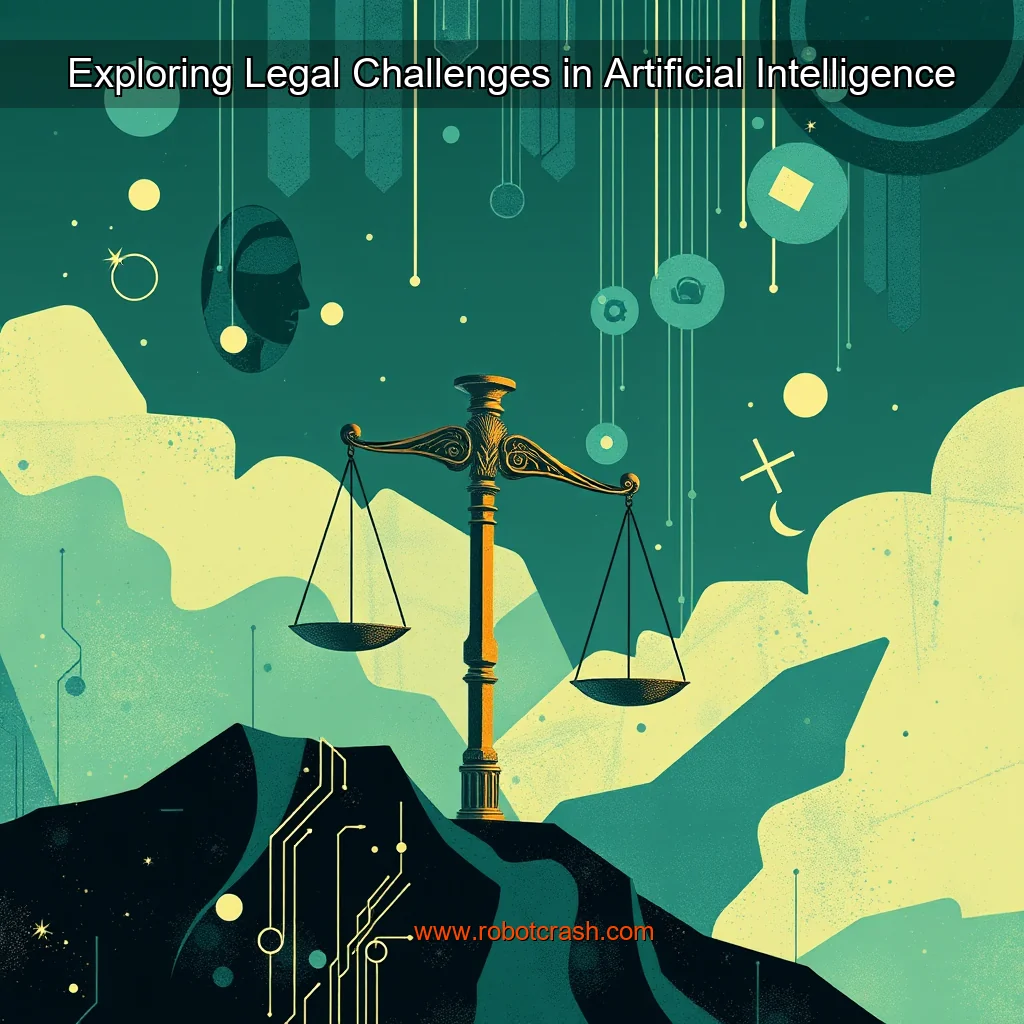
AI law focuses on the development and implementation of regulations, guidelines, and standards for the use of artificial intelligence in various sectors.
AI Law: A New Frontier in the Digital Age
Understanding the Need for AI Law
The rapid advancement of artificial intelligence has led to a significant increase in its applications across various industries, including healthcare, finance, transportation, and education. As AI becomes more pervasive, the need for a specialized legal field to address its implications has become increasingly evident.
The Need for Clear Guidelines in AI Law to Address Accountability, Bias, and Liability Concerns.
The Rise of AI Law
The emergence of artificial intelligence (AI) has brought about a new era in technological advancements, transforming the way we live, work, and interact with one another. As AI systems become increasingly sophisticated, they are being integrated into various aspects of our lives, from healthcare and finance to transportation and education. However, this rapid progress has also raised important questions about the role of law in regulating AI systems.
The Need for AI Law
The lack of clear guidelines and regulations surrounding AI systems has created a significant gap in the legal framework. This absence of clear rules has led to concerns about accountability, liability, and the potential for AI systems to perpetuate biases and discriminatory practices. As AI systems become more autonomous, the need for a comprehensive legal framework that addresses these concerns has never been more pressing.
Key Challenges in AI Law
The Role of AI Law in Shaping Technology Policy
AI law provides a unique opportunity for legal professionals to influence the development of technology policy.
The Rise of AI-Powered Healthcare Tools
The integration of artificial intelligence (AI) in healthcare has revolutionized the way medical professionals diagnose and treat patients. AI-powered healthcare tools analyze vast amounts of patient data, including medical histories, genetic information, and lifestyle factors, to predict the likelihood of developing certain diseases. These tools can identify high-risk patients, enabling early interventions and potentially saving lives.
Predictive Analytics in Healthcare
Predictive analytics is a key component of AI-powered healthcare tools. By analyzing large datasets, these tools can identify patterns and correlations that may not be apparent to human clinicians. For example, a study found that AI-powered algorithms can detect breast cancer from mammography images with a high degree of accuracy.
Embedded Flaws in AI Systems Can Perpetuate Discrimination and Inequality.
The Problem of Bias in AI Algorithms
Bias in AI algorithms is a pervasive issue that affects various aspects of our lives, from hiring and education to healthcare and law enforcement. The problem is multifaceted, and its consequences can be far-reaching. In this article, we will delve into the complexities of bias in AI algorithms and explore the challenges it poses for accountability, transparency, and fairness.
Understanding Bias in AI Algorithms
Bias in AI algorithms refers to the inherent flaws or prejudices that are embedded in the data used to train these systems. This can result in discriminatory outcomes, where certain groups are unfairly treated or excluded. The problem is not limited to a specific industry or sector; it can affect any system that relies on AI, from simple chatbots to complex decision-making systems. Data quality and representation: AI algorithms are only as good as the data they are trained on. If the data is biased or incomplete, the algorithm will learn to replicate these flaws. Algorithmic design: The design of the algorithm itself can also perpetuate bias. For example, an algorithm that uses a particular set of features or weights may inadvertently favor certain groups over others.
Understanding AI Liability
The rise of AI systems has led to a significant shift in the way we approach liability. As AI systems become more autonomous, the lines between human and machine accountability become increasingly blurred. This raises complex questions about who is liable when an AI system causes harm or makes a mistake.
Key Challenges
The Need for AI-Specific Training
Traditional legal training does not fully prepare attorneys to address AI’s complexities. Lawyers need to develop a deeper understanding of AI systems and their limitations. This requires AI-specific training that covers topics such as:
Lawyers must stay up-to-date with the latest developments in AI to provide effective legal services.
The Rise of AI in the Legal Profession
The integration of Artificial Intelligence (AI) in the legal profession has been gaining momentum in recent years. The American Bar Association (ABA) has taken a significant step forward by releasing its first-ever guidance for lawyers on the use of AI. This move acknowledges the growing importance of AI in the legal field and the need for lawyers to understand its applications and implications.
Key Takeaways from the ABA Guidance
The ABA guidance provides several key takeaways for lawyers:
The Need for Continuing Education
The rapid evolution of AI requires lawyers to stay up-to-date with the latest developments in the field.
AI lawyers also provide guidance on data protection, intellectual property, and regulatory compliance.
The Rise of AI Lawyers
The increasing complexity of AI systems has led to a growing need for specialized legal expertise.
AI-Related Disputes on the Rise, Expertise Needed to Navigate Complexities
The Rise of AI-Related Disputes
The increasing presence of artificial intelligence (AI) in various aspects of life has led to a surge in disputes involving AI. These disputes can range from employment contracts to intellectual property rights, and from product liability to data protection. As AI becomes more integrated into our daily lives, the need for clear guidelines and regulations has never been more pressing.
The Role of AI Law Experts
Lawyers with expertise in AI law are playing a crucial role in handling these disputes. They are not only representing clients but also setting new legal precedents in the process. AI law experts are well-versed in the complexities of AI and its applications, allowing them to navigate the intricacies of AI-related disputes.
AI law will be a growing area of focus for many lawyers. AI law is not a single discipline but a multidisciplinary field. It draws upon fields such as computer science, law, ethics, and policy. As a result, lawyers working in AI law will need to possess a broad range of skills, including technical expertise and a strong understanding of the legal framework. This means that lawyers will need to collaborate with experts from other disciplines to effectively address the complex issues that arise in the development and use of AI systems. Here are some of the key areas where AI law is expected to play a significant role. 1. Data Privacy and Security: AI systems require vast amounts of data to operate effectively. As a result, data privacy and security become critical concerns in the development and use of AI systems. AI law will need to address issues such as data collection, storage, and transmission, as well as the protection of sensitive information. This will involve developing and implementing robust data protection laws and regulations that balance individual privacy rights with the need for AI systems to operate effectively.