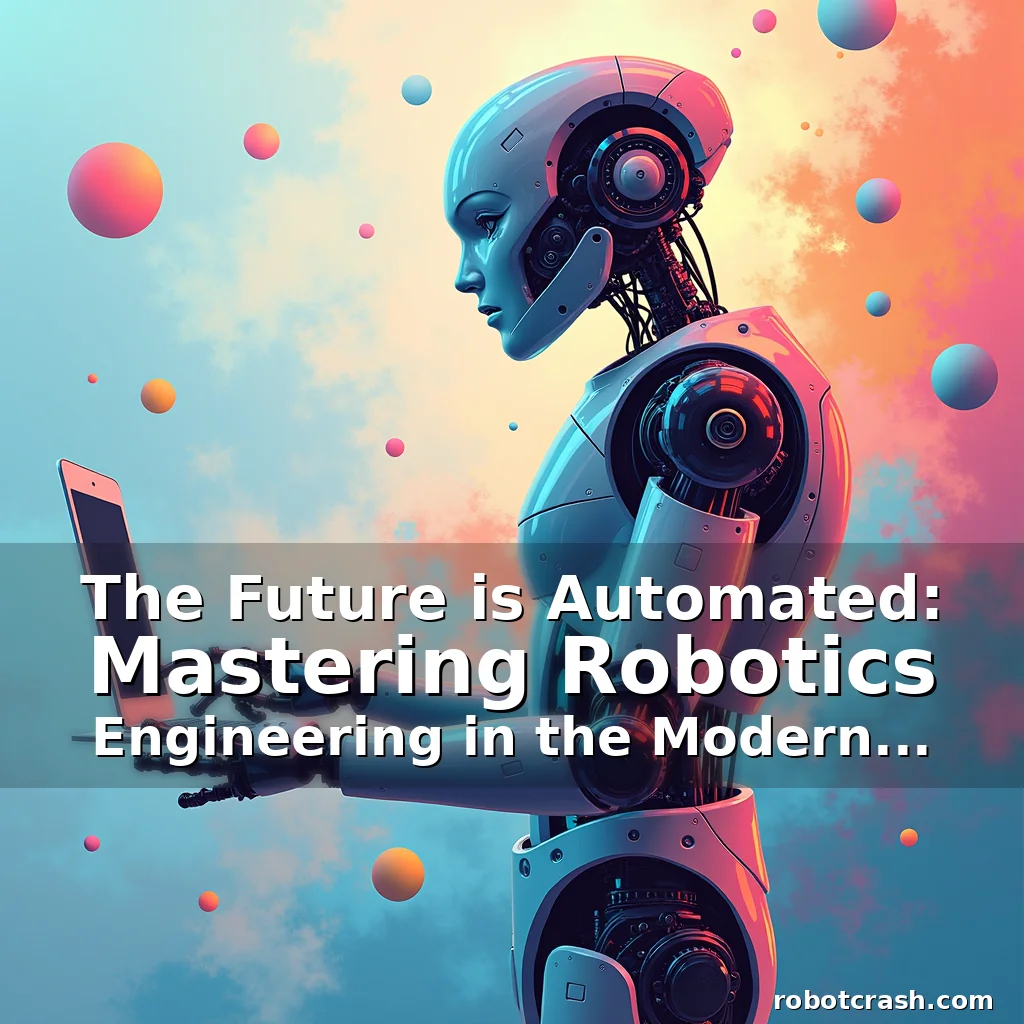
The Future is Automated: Mastering Robotics Engineering in the Modern Age
In an era defined by technological breakthroughs, robotics engineering stands at the forefront of innovation. This dynamic field combines mechanical design, electronic systems, and artificial intelligence to create machines that can perform tasks once reserved for humans.
Rapid advancements in computing power, sensor technology, and machine learning have transformed robotics from science fiction into everyday reality. From self-driving cars to medical robots, these innovations are reshaping industries and redefining what’s possible.
Fundamental Principles of Robotics Engineering
At its core, robotics engineering integrates multiple disciplines to build intelligent machines. Engineers must understand both hardware components and software algorithms to develop functional robotic systems.
This interdisciplinary approach requires knowledge of mechanics, electronics, computer science, and control theory. These fields work together to enable robots to perceive their environment, make decisions, and execute actions effectively.
Three key elements define any robotic system:
- Mechanical structure: Provides physical form and movement capabilities through joints, actuators, and materials
- Sensors: Enable perception of surroundings using cameras, lidar, accelerometers, and other detection devices
- Control systems: Process input data and generate appropriate responses through embedded programming and AI
Modern robotics engineers often use simulation tools before building physical prototypes. Software platforms like ROS (Robot Operating System) allow testing of complex behaviors without expensive hardware investment.
Design considerations include weight distribution, energy efficiency, and durability. These factors determine how well a robot will function in different environments and applications.
Evolving Technologies Shaping Robotics Innovation
The rapid development of microprocessors has dramatically increased computational power available to robotic systems. Today’s robots can process vast amounts of sensory information in real-time.
Advancements in battery technology now enable longer operational times between charges. Lithium-ion and solid-state batteries provide better energy density than previous generations.
New material sciences are revolutionizing robot construction. Lightweight composites, shape-memory alloys, and self-healing polymers offer improved performance characteristics.
Artificial intelligence integration allows robots to learn from experience and adapt to new situations. Machine learning algorithms help robots recognize patterns and optimize decision-making processes.
Cloud connectivity enables remote monitoring and maintenance of robotic systems. This capability is especially valuable for industrial automation and disaster response scenarios.
Diverse Applications Across Industries
Industrial manufacturing remains one of the largest markets for robotics. Assembly lines use robotic arms to perform precise, repetitive tasks with high accuracy.
In healthcare, surgical robots assist doctors with minimally invasive procedures. These systems enhance precision while reducing recovery times for patients.
Agriculture benefits from autonomous machinery that can plant seeds, monitor crop health, and harvest produce efficiently. Drones equipped with multispectral sensors analyze soil conditions and detect pests.
Logistics companies deploy warehouse robots to streamline inventory management. Autonomous mobile robots navigate aisles to pick items and transport them to packing stations.
Disaster response teams use specialized robots for search-and-rescue missions. These machines can enter dangerous environments where human presence would be too risky.
Education institutions incorporate robotics into STEM curricula. Hands-on projects teach students problem-solving skills while fostering interest in engineering careers.
Challenges Facing Modern Robotics Engineers
Ensuring safety in collaborative environments presents significant challenges. Robots working alongside humans need advanced sensing capabilities to avoid accidents.
Developing robust navigation systems for unpredictable terrains remains technically demanding. Outdoor robots must handle uneven surfaces, weather variations, and changing light conditions.
Creating emotionally intelligent robots involves complex psychological modeling. Social robots used in therapy or customer service require nuanced understanding of human behavior.
Data privacy concerns arise when implementing connected robotic systems. Secure communication protocols are essential to protect sensitive information transmitted over networks.
Regulatory frameworks lag behind technological progress. Governments struggle to establish standards for ethical AI implementation and workplace safety regulations.
Emerging Trends Transforming the Field
Haptic feedback technology enhances human-robot interaction by providing tactile sensations. This advancement improves teleoperation experiences and training simulations.
Biomimicry inspires innovative designs by studying natural organisms. Researchers develop soft robots modeled after octopuses and insects for delicate manipulation tasks.
Swarm robotics mimics collective animal behaviors to achieve complex objectives. Groups of small robots can coordinate activities for construction, exploration, or environmental monitoring.
Miniaturization allows creation of microbots capable of performing intricate operations inside the human body. Medical researchers envision nanobots delivering targeted treatments within bloodstreams.
Humanoid robots continue to evolve toward greater dexterity and mobility. Companies invest heavily in developing bipedal machines that can interact naturally with human environments.
The Role of Education in Robotics Development
Academic programs prepare future engineers through hands-on experimentation and theoretical study. Curriculum typically includes courses in dynamics, controls, and embedded systems.
Laboratories equip students with tools for prototyping and testing ideas. Access to 3D printers, CNC machines, and simulation software facilitates practical application of classroom concepts.
Cross-disciplinary collaboration fosters innovation by combining expertise from various domains. Teams consisting of engineers, designers, and programmers often yield groundbreaking solutions.
Internship opportunities connect students with industry professionals who share real-world insights. Practical experience complements academic learning and builds professional networks.
Online resources expand educational access globally. Open-source platforms provide free tutorials, datasets, and coding libraries for aspiring robotics engineers worldwide.
Preparing for a Career in Robotics Engineering
Aspiring engineers should pursue degrees in electrical engineering, mechanical engineering, or computer science. Specialized programs in mechatronics combine multiple disciplines effectively.
Gaining proficiency in programming languages like Python, C++, and MATLAB is crucial. These tools facilitate algorithm development and system integration.
Participating in robotics competitions helps develop practical skills under pressure. Events like FIRST Robotics Challenge and VEX World Championships test technical abilities.
Building personal projects demonstrates initiative and creativity. Creating functioning robots showcases problem-solving abilities during job interviews.
Networking with professionals through conferences and meetups opens career opportunities. Industry events provide insight into current trends and potential employers.
Conclusion
Robotics engineering represents the convergence of many exciting technologies shaping our world today. As we’ve explored, this field offers endless possibilities across numerous industries.
To stay competitive in this rapidly evolving domain, continuous learning is essential. Embracing emerging technologies and seeking out experiential education will position you at the forefront of innovation.

news is a contributor at RobotCrash. We are committed to providing well-researched, accurate, and valuable content to our readers.